Drying fruit, vegetables and jerky
A batch of dried fruit or vegetables and a batch of jerky, made the safe way, cooled, packed and dated.
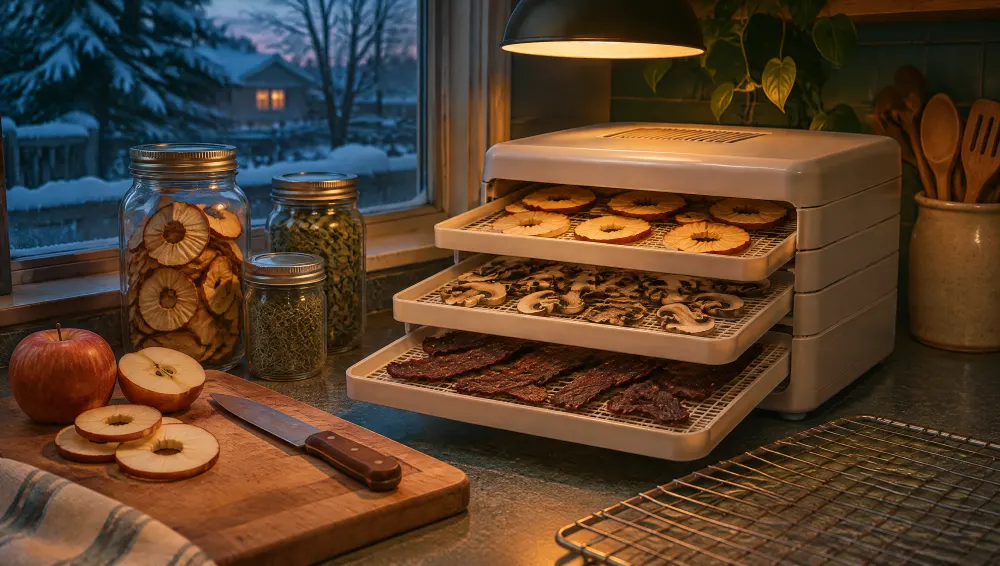
- About 2 hours
- Low cost if you dry jerky in the oven, more if you buy a dehydrator
Steps
- Set the heatFood dehydrators are designed to dry food fast at 60°C (140°F). For jerky, put the racks in a dehydrator or oven preheated to 60°C (140°F).
- Heat jerky to a safe temperatureJerky is safer once the meat reaches an internal 71°C (160°F). Either heat the strips in their marinade before drying, or heat the dried strips for 10 minutes in an oven preheated to 135°C (275°F) if they were cut 6 mm (1/4 inch) thick or less. Thicker strips need longer. Marinate in the fridge and never reuse marinade.
- Know when jerky is doneDry it until a test piece cracks but doesn't break when you bend it. Check several strips with a thermometer. For poultry and game meat, Health Canada's safe internal temperature is 74°C (165°F).
- Condition dried fruitLet dried fruit cool, pack it loosely in jars, seal them and let them stand for 7 to 10 days, shaking them daily. If moisture forms inside a jar, put the fruit back in the dehydrator.
- Cool, pack and store itCool everything completely before packing, since warm food sweats and can grow mould. Most dried fruit keeps 1 year at 16°C (60°F) and 6 months at 27°C (80°F), and vegetables about half as long. Properly dried jerky keeps two weeks at room temperature in a sealed container; refrigerate or freeze it for longer.
- Check it while it's storedFood packed bone dry can still spoil if it takes up moisture. Glass jars show any moisture inside, so check them often.
Be careful
Use a food thermometer. Jerky meat needs to reach 71°C (160°F), and Health Canada's safe temperature for poultry and game is 74°C (165°F).
When it's done
You can dry fruit, vegetables and jerky safely.
Doing it together
Hold a drying day: everyone brings one fruit or vegetable to slice, and one person shows the jerky heating step with a thermometer. Compare methods and results, not pantry shelves.
In an emergency, call 911. WeVenture isn't an emergency service.
This lesson is a plain summary of the official advice cited below, not a guarantee, and no single plan fits every home. Follow local officials in a real emergency.
Where this comes from
How it went for people
Nobody has shared how it went yet.
Do it, then say how it went
Members mark lessons done, keep a private plan for their home, and compare notes under a handle.
Join to post