Dry food packed for the long run
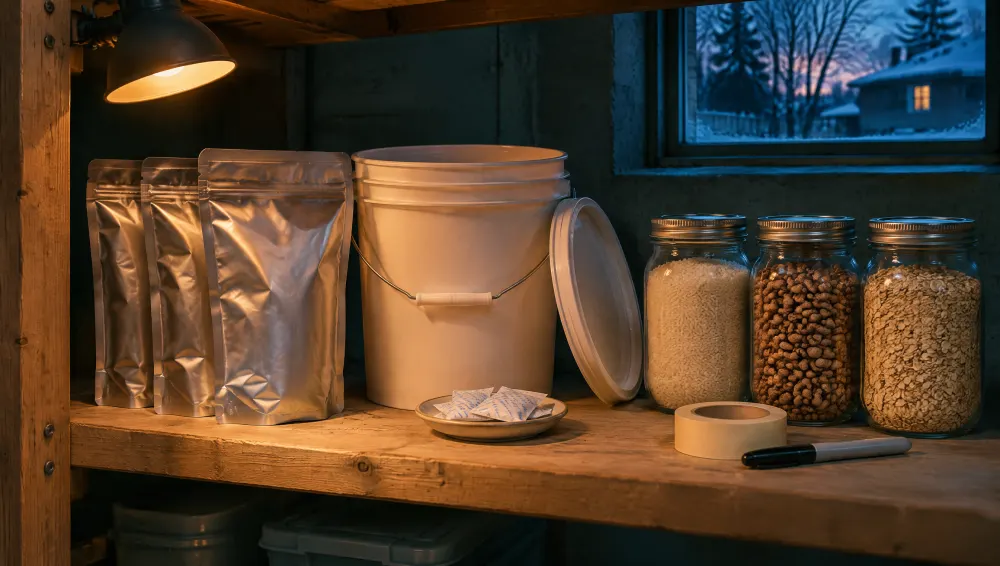
A first few packages of dry staples, sealed the safe way, labelled and stored somewhere cool, dry and dark.
- About 1.5 hours
- Low cost: foil pouches, oxygen absorbers and a food-grade bucket
Steps
- Pick food that is truly dryLong-term packing is for dry staples like white rice, dried beans, wheat and oats. For long-term storage, food should have 10% or less moisture. Keep to products low in moisture and oil, and leave anything moist out of sealed, low-oxygen packages.
- Know why moisture mattersBotulism bacteria can grow when there is no oxygen. Oxygen absorbers and vacuum sealing take the oxygen away, so botulism poisoning may result if moist food is packed that way. That's why food sealed with oxygen absorbers must be dry, about 10% moisture or less. Food that needed the fridge before it was sealed still needs the fridge after.
- Seal it in the right containerUse food-grade containers with an airtight seal, like foil pouches or sealable food-grade buckets. The foil layer in a pouch greatly cuts how much oxygen and moisture get through. Seal an oxygen absorber in with the food, and several pouches can go inside one bucket.
- Label every packageWrite the name of the food and the date you packed it on each one, so the oldest is easy to find.
- Store it cool, dry and darkA steady 4 to 16°C (40 to 60°F) is best, and avoid freezing. Every 6°C (10.8°F) warmer cuts shelf life about in half. Keep it out of the light, which wears down food value.
- Rotate itPolished white rice, properly sealed and stored, keeps 25 to 30 years, but once a package is open, use it within one to two years. Open the oldest package first and cook from it, so the food and the skill both stay fresh.
Be careful
Never seal moist food with oxygen absorbers or in a vacuum bag to keep at room temperature. Botulism doesn't change how food looks, smells or tastes.
When it's done
You can pack dry food for long-term storage.
Doing it together
Pack one batch together: check what's dry enough, seal a pouch with an oxygen absorber and label it. Compare containers and methods, never how much anyone has put away.
In an emergency, call 911. WeVenture isn't an emergency service.
This lesson is a plain summary of the official advice cited below, not a guarantee, and no single plan fits every home. Follow local officials in a real emergency.
Where this comes from
How it went for people
Nobody has shared how it went yet.
Do it, then say how it went
Members mark lessons done, keep a private plan for their home, and compare notes under a handle.
Join to post