A first food garden for your zone
A small garden bed or a few containers of food your household eats, chosen with your plant hardiness zone in mind, and notes for next year.
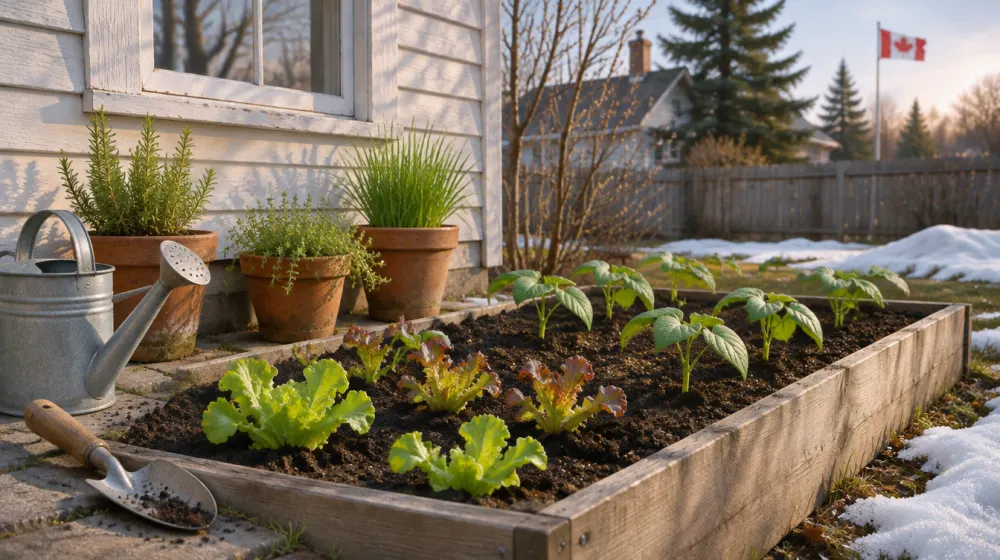
- About 2 hours
- Low cost: seeds, soil and a few containers
Steps
- Find your zoneCanada's plant hardiness zones run from 0 in the coldest north to 9. The maps were first developed by Agriculture and Agri-Food Canada and are now published by Natural Resources Canada at planthardiness.gc.ca. Look up where you live and write your zone down.
- Know what the zone tells youZones are about which perennial plants, the ones that come back each year like berry bushes, rhubarb and fruit trees, can make it through the winter where you live. Check a plant's zone before you buy it. For yearly vegetables, ask a local garden centre or gardening group when people in your town plant out.
- Start small with what you eatOne bed or a few large containers is plenty for a first year. Grow a handful of things your household already eats, and follow the timing on each seed packet.
- Water the soil, not the leavesWater at the base of each plant. A rain barrel is a good source for the garden, and the lesson Water for the long run covers setting one up.
- Keep notes for next yearWrite down what you planted, when, and how it did. Next spring, grow more of what worked and drop what didn't.
When it's done
You can grow food at home for a Canadian climate.
Doing it together
Look up everyone's zone together, then trade seeds, seedlings and what grew well last year. Pair up anyone starting out with someone who has a season behind them.
In an emergency, call 911. WeVenture isn't an emergency service.
This lesson is a plain summary of the official advice cited below, not a guarantee, and no single plan fits every home. Follow local officials in a real emergency.
Where this comes from
How it went for people
Nobody has shared how it went yet.
Do it, then say how it went
Members mark lessons done, keep a private plan for their home, and compare notes under a handle.
Join to post