Freeze-drying at home, safely
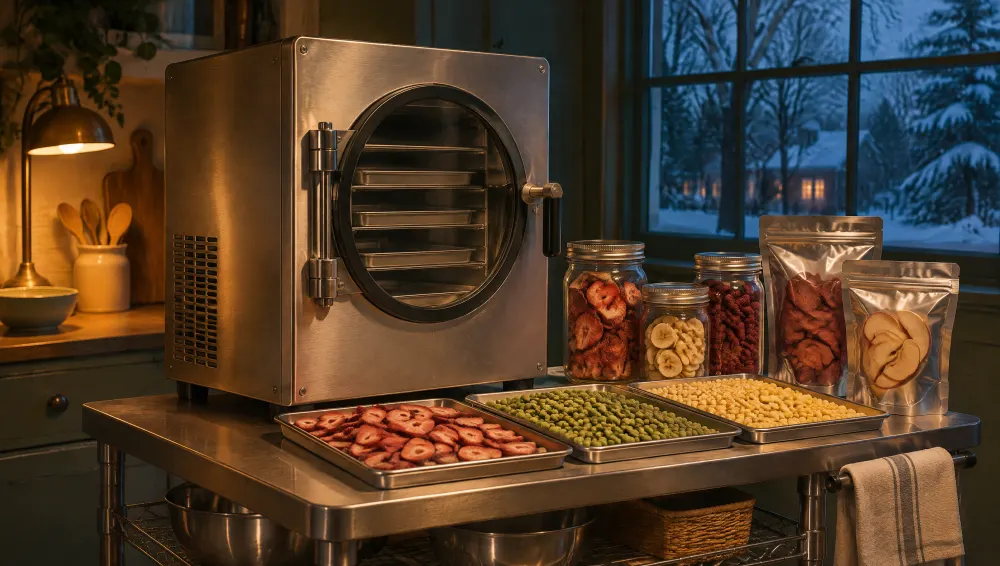
A first batch of freeze-dried food, made from food that was safe to start with, checked for dryness, sealed and dated.
- About 2 hours
- High if you buy a home freeze dryer, so try one with a group member who owns one first
Steps
- Know what it does and doesn't doA home freeze dryer freezes food, then uses a vacuum to turn the ice into vapour. It keeps food from spoiling, but it doesn't make it safer: freeze-drying does not kill bacteria, it preserves them, and they can become active again when water is added back.
- Start from food that is already safeFully cook raw meat, poultry and seafood before freeze-drying. Health Canada's safe internal temperature is 74°C (165°F) for poultry and 71°C (160°F) for ground beef. Skip raw eggs, raw milk and raw flour; use pasteurized liquid eggs or fully cooked scrambled eggs instead.
- Choose foods that dry wellHigh-fat foods dry poorly, and high-sugar foods hold on to water. Oils and mayonnaise aren't safe or practical to freeze-dry. Cut most foods 6 to 13 mm (1/4 to 1/2 inch) thick, and meat no thicker than about 2 cm (3/4 inch), so they freeze and dry evenly.
- Check it's dry, then seal it right awayFinished food should feel crisp, dry or brittle, with no cold or soft spots. Seal it immediately in thick foil pouches without clear windows, with an oxygen absorber, or vacuum seal it. Food sealed with oxygen absorbers must be dry.
- Date it and eat it in rotationUtah State University Extension doesn't recommend eating home freeze-dried food more than 5 to 10 years after processing, and vitamin C can drop within 1 to 3 years. Write the food and the date on every pouch and eat the oldest first.
- Cook it again after adding waterFood you rehydrate before eating, like meat or eggs, needs a step that kills bacteria, such as cooking. Ready-to-eat snacks like freeze-dried fruit can be eaten dry.
Be careful
Freeze-drying doesn't kill bacteria. Cook meat, poultry and eggs to a safe internal temperature before freeze-drying.
When it's done
You can freeze-dry food safely at home.
Doing it together
Bring one freeze-dried food and how you made it. Compare how you cut it, how long it took and how you check that it's dry. Talk about methods, never about how much anyone has stored.
In an emergency, call 911. WeVenture isn't an emergency service.
This lesson is a plain summary of the official advice cited below, not a guarantee, and no single plan fits every home. Follow local officials in a real emergency.
Where this comes from
How it went for people
Nobody has shared how it went yet.
Do it, then say how it went
Members mark lessons done, keep a private plan for their home, and compare notes under a handle.
Join to post