A practice outage night
You've spent an evening without lights on purpose, and you know three things you'd change.
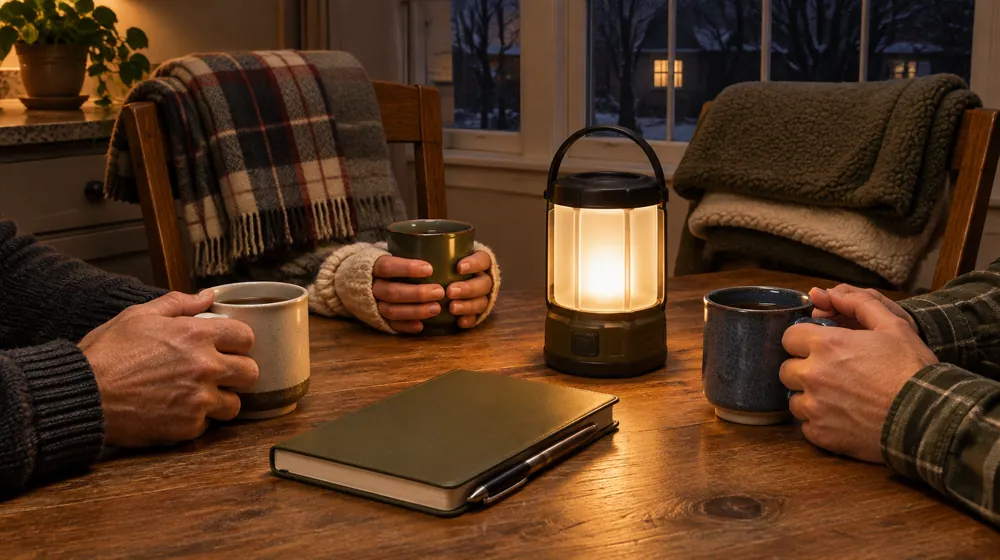
- About 2.5 hours
- Free
Steps
- Test your alarms firstPress the test button on every smoke and carbon monoxide alarm. Carbon monoxide can't be seen or smelled, so the alarm is how you'd know.
- Turn off the lights, not the powerLeave the main switch, the heat and the fridge on. Turn off lights and screens for the evening and use only what's in your kit.
- Eat from your no-cook pantryMake dinner without the stove. It's the quickest way to find out what your box is missing.
- Stay warm without the thermostatUse warm layers and blankets, and gather in one room. Never use a barbecue, camp stove or generator indoors, including in a garage.
- Learn what the fridge can doIn a real outage, keep the fridge and freezer closed. A closed fridge keeps food cold for about 4 hours, a full freezer for about 48 and a half-full one for about 24.
- Write down three things to changeBefore you turn the lights back on, note what you missed most. That's your next lesson.
Be careful
If you feel dizzy, confused or unusually sleepy, get outside and call 911. It could be carbon monoxide.
When it's done
You can run a household through a practice outage.
Doing it together
Pick the same evening as the rest of your crew, then compare notes at your next session.
In an emergency, call 911. WeVenture isn't an emergency service.
This lesson is a plain summary of the official advice cited below, not a guarantee, and no single plan fits every home. Follow local officials in a real emergency.
Where this comes from
How it went for people
Nobody has shared how it went yet.
Do it, then say how it went
Members mark lessons done, keep a private plan for their home, and compare notes under a handle.
Join to post